Plan your window budget.
Choose how many windows to see your estimate.
1 window30 windows
Estimated budget$5,4006 windows × $900
Your final price depends on window size, style, glazing and installation.
A website written for the customers you want, built to answer their questions and designed to make getting in touch the easiest thing on the page.
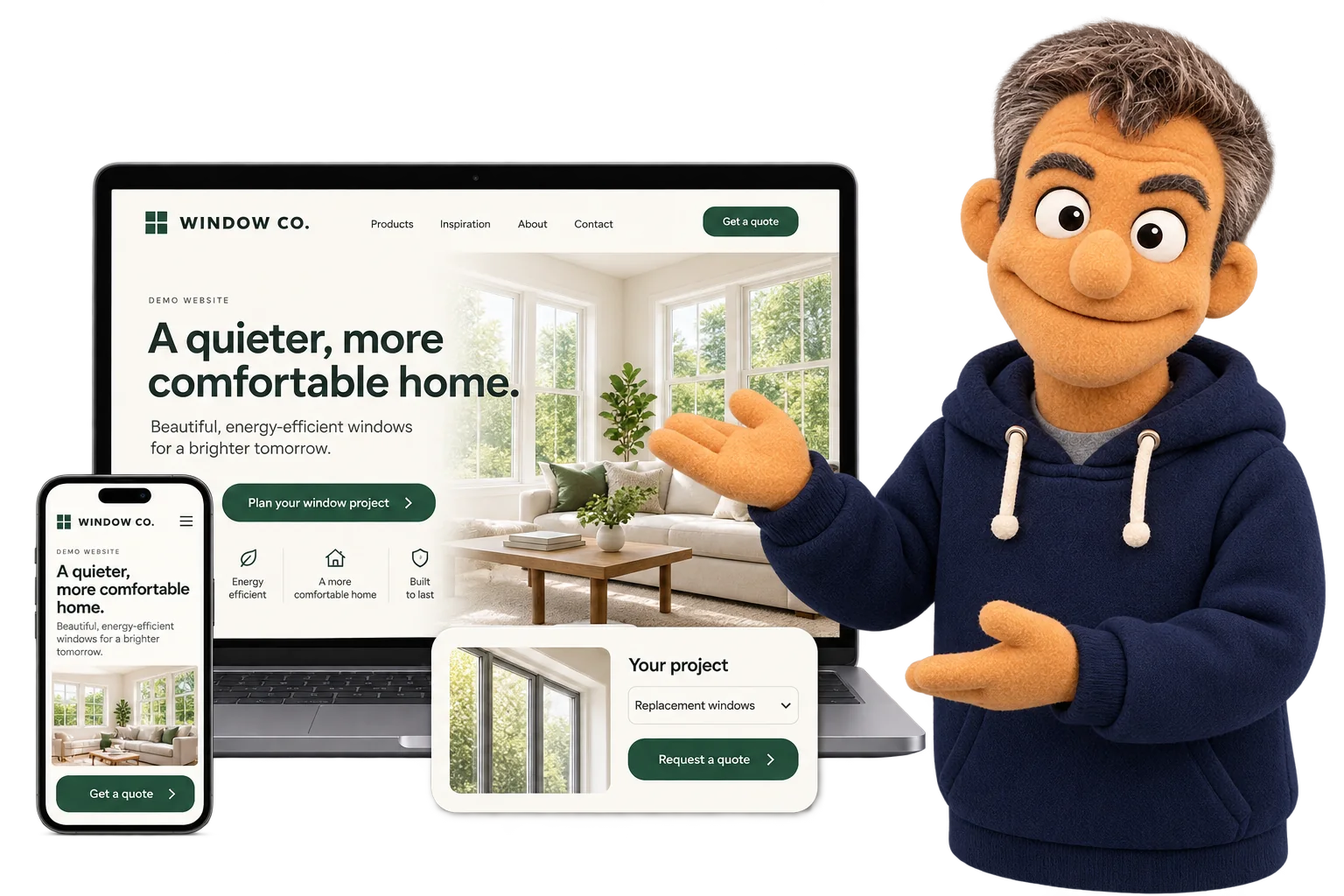
Who is your customer? An entrepreneur looking for someone to handle their taxes? A homeowner with equity, ready to spend $25,000 on new windows? Every page should be written for that person: their questions, their worries and the words they use.
People ready to spend real money want it to be easy. Answer their questions before they ask, show them what it costs and what happens next, and they'll choose you over the company that made them guess.
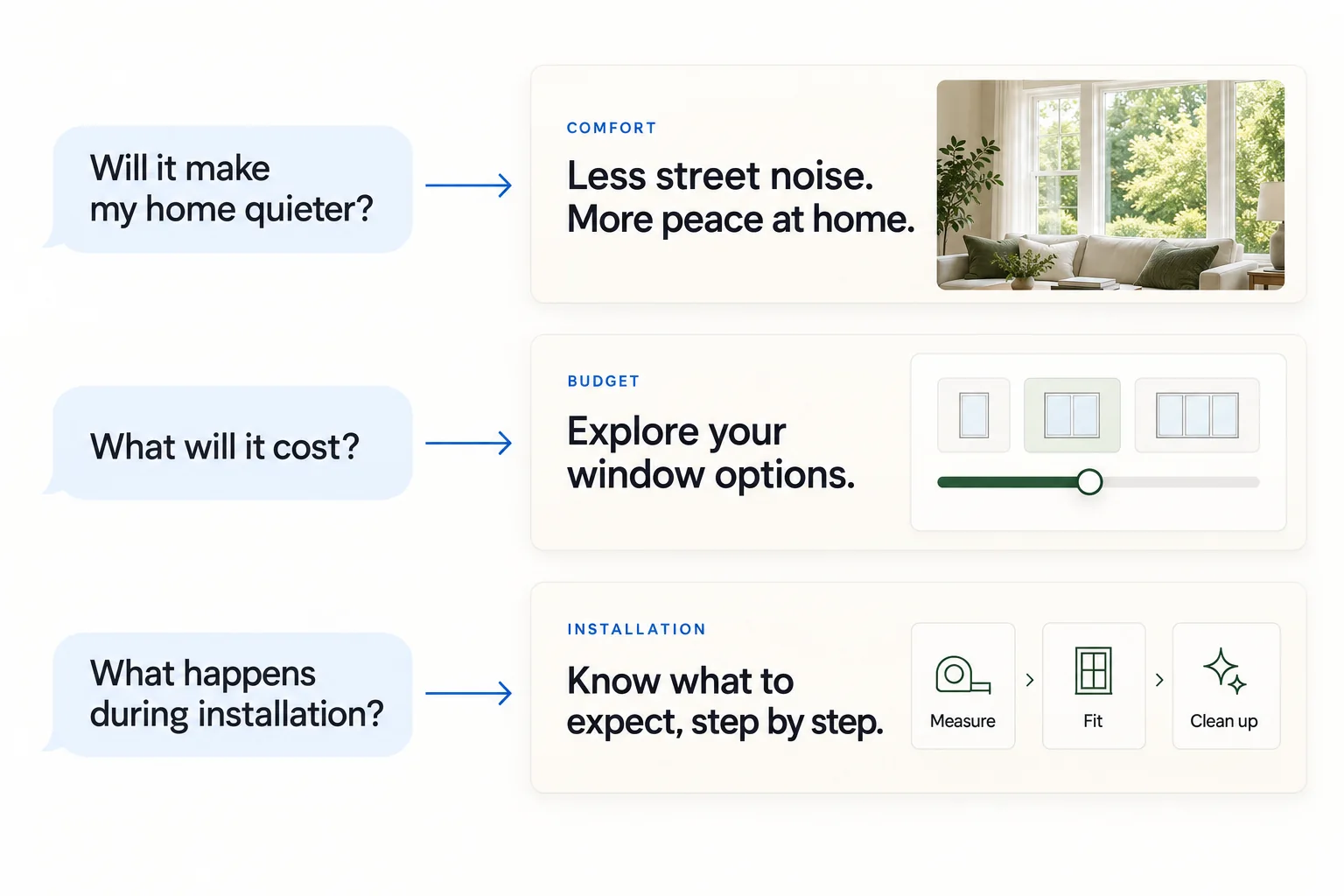
Help homeowners explore a window replacement budget before they call. A useful answer gives them a reason to take the next step.
Show the estimate first, then offer the next step: a free in-home measuring that turns a curious visitor into a booked appointment. Try it.
Choose how many windows to see your estimate.
Your final price depends on window size, style, glazing and installation.
Good design gets attention. Good copy gets the call.
Useful answers, honest pricing and real advice before asking for anything. Customers remember who helped them.
Nobody wants "triple-pane glass." They want a quieter house and a lower heating bill.
Every page ends by telling the visitor exactly what to do next. If you don't ask, they won't call.
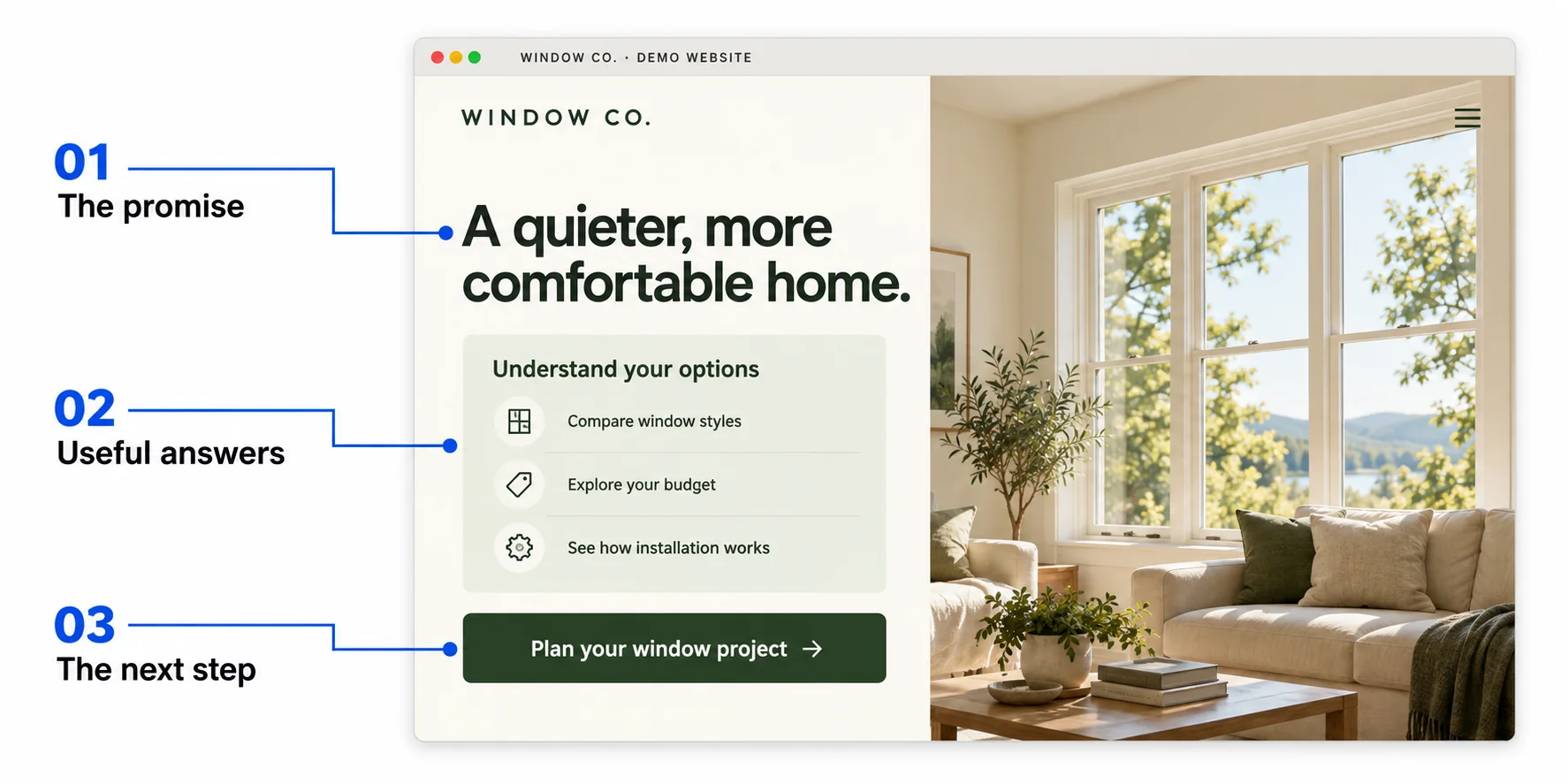
More time goes into taking things away than adding them. Everything on the page has a purpose. Less is more.
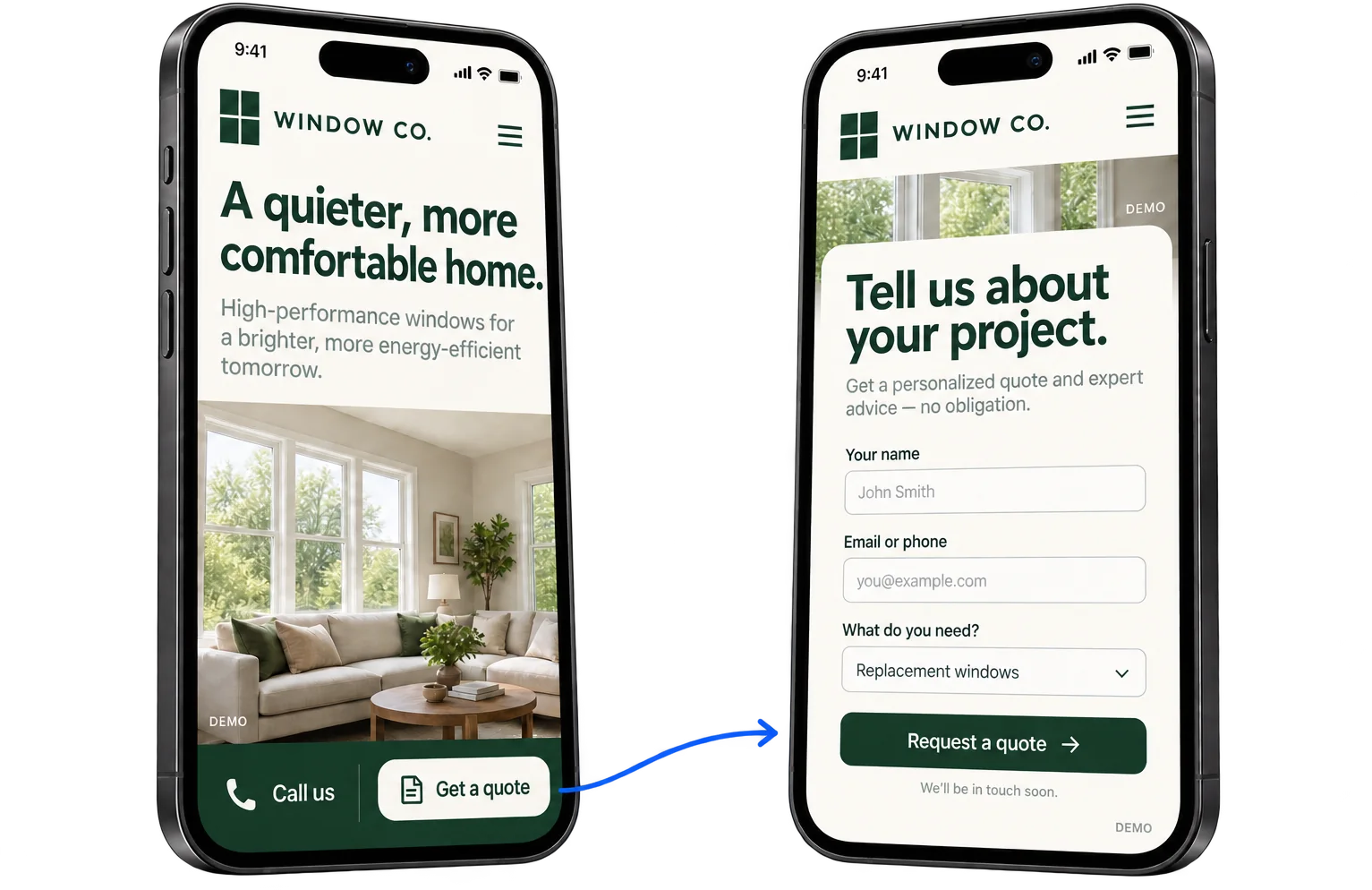
One contact button, one main navigation and one phone number, branded consistently. Nothing confusing, nothing competing.
Designed for your type of business, so when a visitor has seen enough, the button is right there.
Let your best work make the case. One swipe says more than a paragraph.
Short forms that people finish, with the details you need to quote, sent straight to your team.
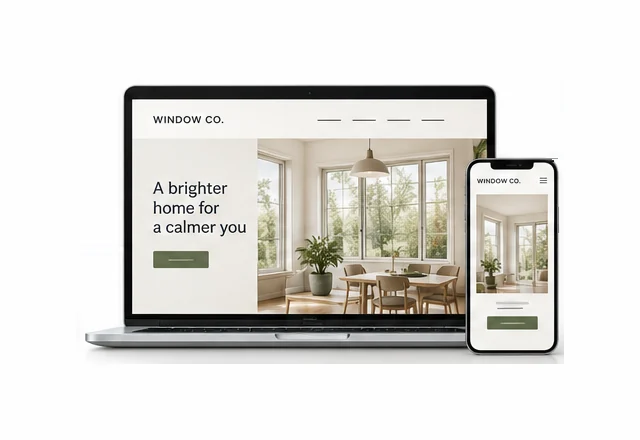
Most of your customers will see the site on a phone, so it's designed for the thumb first.
Your story, your people, your customers and your history, brought to life with work only a designer can create.
Structure that gives you a reason to keep adding value long after launch.
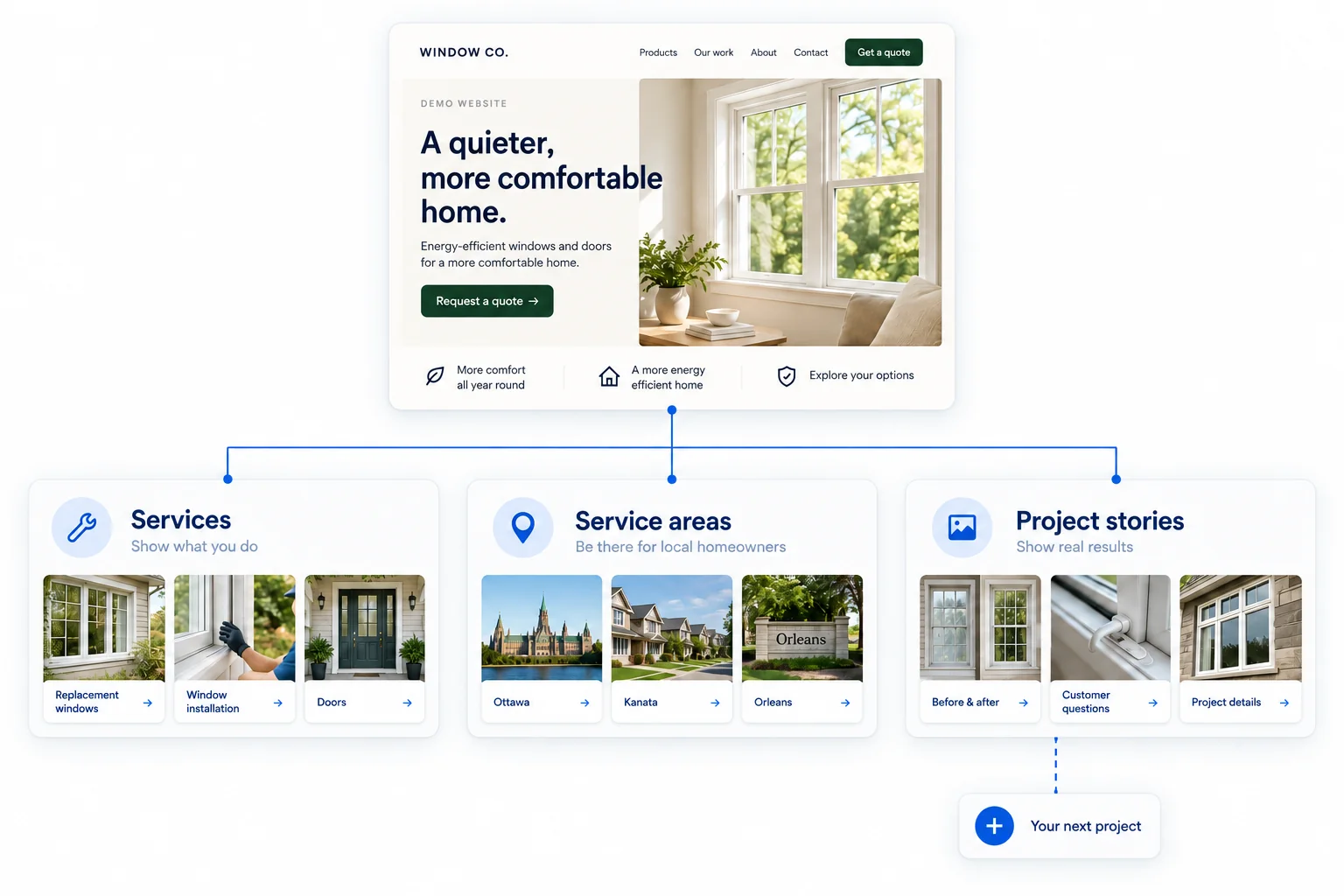
Finished a new shower? Write it up, file it under bathrooms and help the next customer planning one. Categories turn posts into a library people use.
Visitors filter by service, style or area to find work like theirs. It also makes project photography a standard part of every job.
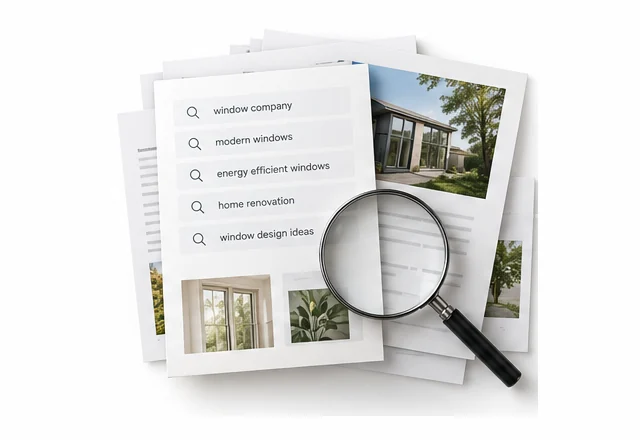
A page for each service in each area you want to win, mapped from real search data instead of guesses.
 01
01
 02
02
 03
03
 04
04
 05
05
 06
06
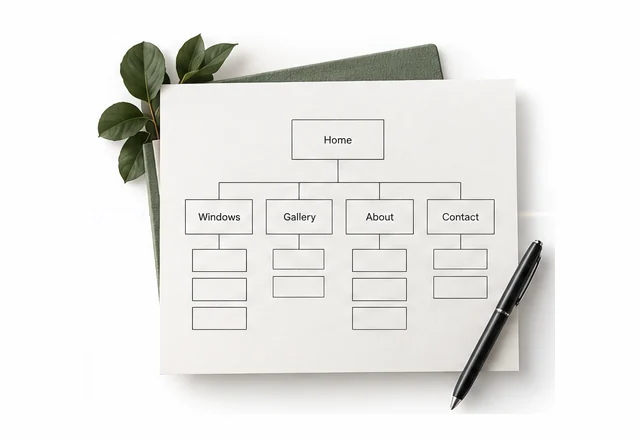
You get the website we agree on during the research phase, with the sitemap and content plan defining the pages, content and functionality included. We work through revisions together so the finished site reflects your business, sounds like you and supports the agreed SEO goals.
A small website can launch in as little as a week. Most projects aim to launch within 30 days, while larger sites or projects needing several rounds of feedback and content approval can take up to two months. We agree on the timeline once the scope is clear.
At the start, I need your approval on the sitemap and content plan, accurate information about your business, and any photos you want to use.
After that, you can be as involved as you like. You’ll have opportunities to review the work and shape the content, but you won’t need to manage the project day to day. Once the direction is agreed, I can handle the research, writing, design and build independently.
I build replacement websites rather than taking on repairs to an existing site. That lets me create a consistent foundation for the design, content, search visibility and customer experience.
Before replacing anything, I review what’s worth keeping: useful content, existing page addresses and pages already attracting traffic. Those inform the new site, with redirects where addresses need to change. If your current website is already performing well, a full rebuild may not be the right fit.
Yes. I use AI to draft the content, then review and edit it against your business information, messaging and content plan. You’re welcome to contribute or revise it.
Your own photos are the first choice. Even five to ten good images and a few examples of your work give us something useful to build around. A larger selection gives us more design options. Where needed, we can supplement them with stock or AI-generated images, without presenting generated scenes as your actual work.
Yes. Before building out the full site, we agree on the visual direction using your branding, preferences and examples of websites you like.
You’ll review representative page layouts and sections first. Once those are approved, they become the foundation for the rest of the website, keeping the design consistent and making changes easier to apply.
You’ll probably get tired of revisions before I do. The aim is to get the agreed website right, and we’ll work through feedback together.
If a request adds new pages, functionality or a different direction beyond the agreed plan, we’ll discuss how that affects the scope and timeline before proceeding.
I start by checking which pages already attract search traffic and enquiries. Useful content and page addresses are preserved where appropriate, and pages that move get permanent redirects to relevant replacements.
My website service is primarily for established businesses whose current sites underperform. If yours already brings in strong search traffic and consistent leads, I’ll assess whether a rebuild makes sense before recommending one. Existing performance is something to protect.
The new website is built and checked before the domain is switched over. The aim is a smooth changeover with no interruption, and your existing email records are preserved during the move.
I provide website hosting, but email stays with a separate provider. If you need to move your email, I can help coordinate a switch to a service such as Google Workspace or Microsoft 365.
Existing booking widgets, embedded CRM forms and payment links can be incorporated into the website where supported. Tracking numbers, form submissions and thank-you pages are configured around the agreed tracking plan.
More involved work—such as syncing customer records, automating follow-up or connecting several systems—is scoped separately through my consulting and automation services.
I recommend keeping your domain registered in your own name, in an account you control. You should always retain control of your business’s web address.
You’ll receive a backup of the website at launch. I offer hosting, but the site is portable and can be moved to another compatible hosting provider. Any third-party accounts and access requirements should be agreed as part of the project.
Your website is built around the sitemap, content plan and SEO requirements agreed during the research phase. Ongoing SEO is a separate monthly retainer, with the scope based on your business needs, competition and growth goals.
We review performance each month and update the priorities, so the work responds to what your business needs next.
We measure Google search performance, phone calls and contact form submissions. Google Search Console shows how often your website appears in search results, which searches bring visitors and how many people click through. It provides data recorded by Google from actual search activity, giving us a measurable baseline for tracking progress.
Call and form tracking show whether visitors are getting in touch. To measure sales, we connect those enquiries to booked jobs or purchases through your CRM or sales records. Together, these help show whether the website is attracting customers and contributing to revenue.
Golf courses, plumbers, tow trucks and clinics all win the same way: a website built around their customers that brings in more of the right ones.